 Skip to content


Promotion Data Lives in Different Places
Product structures, retailers, promotion groups, discount types, plans, and actual results may be managed separately.

Trusted Brands











Trade Promotion Management Explained
Trade promotion management (TPM) software helps CPG companies plan, approve, execute, track, and evaluate promotions with retailers, distributors, and other customers.
TPM software replaces disconnected spreadsheets and manual processes with structured workflows for promotion planning, demand forecasting, budgets, approvals, trade spend, deductions, and performance reporting.
Expertise Accelerated brings these activities together so commercial and finance teams can work from consistent promotion data from initial planning through final reconciliation.
One Connected Promotion Record
From customer plan to financial reconciliation
When Spreadsheets Stop Being Enough
A promotion does not end when a discount is approved. Teams still need to connect the customer, products, plan, actual activity, deductions, and final financial result.
TPM tool organizes the core activities involved in planning, tracking, reconciling, and reporting trade promotions.

Product tree, retailers and distributors, deduction types, promotion groups, and configuration.

Create promotion plans and see scheduled activity in one structured calendar.

Record retailer deductions, validate them, and connect claims with promotion activity.

Record actual volume and compare the promotion plan with what occurred.

Review planned and actual financial performance by retailer.

Generate period, retailer, promotion group, deduction type, and plan-versus-actual reports.
Promotion Data Setup
Every CPG company structures trade promotions differently. TPM tool PromoQuery provides a defined environment for organizing the information used when promotions are created.
Multiple products can be organized into promotional groups, while deduction types can reflect the way your business classifies trade and other promotional activity.
Planner & Calendar
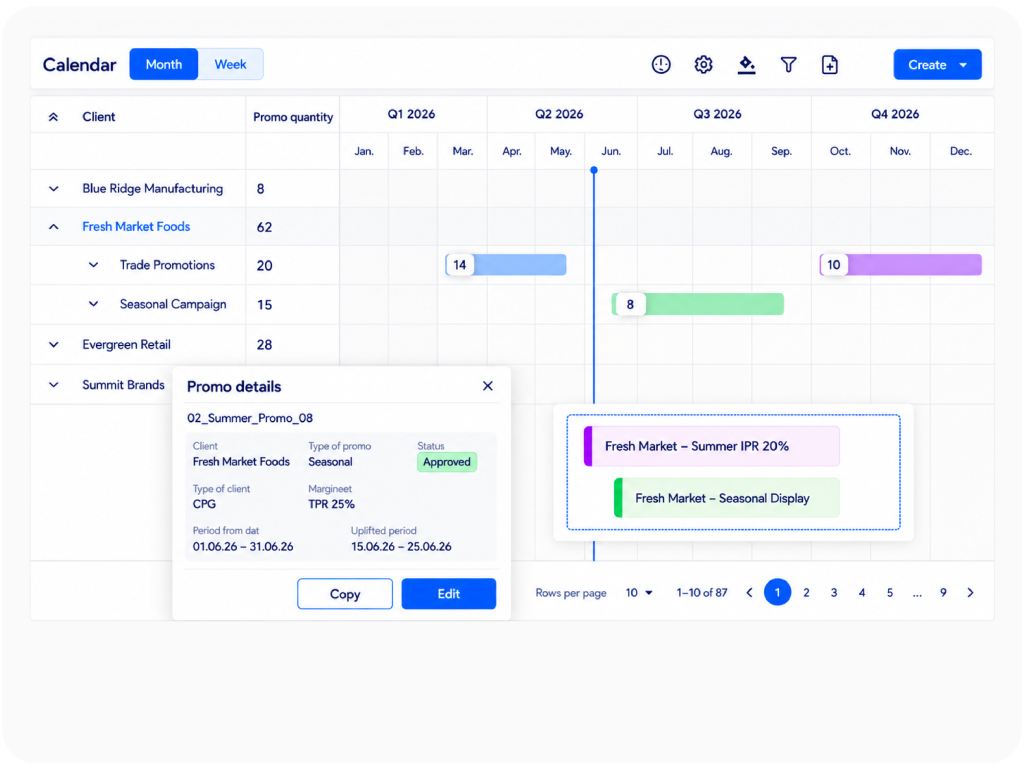
Move promotion planning away from disconnected spreadsheets. Create promotion activity inside the TPM planner and use the calendar to see when promotions are scheduled.
The full Planner and Calendar are included in both the free and expanded versions of the TPM tool.
Deductions
Suppose a retailer claims that part of a delivery was short. Before accepting the deduction, your team needs to compare the claim with the quantity shipped, proof of delivery, quantity received, and the amount deducted.
If shipment records show there was no shortage, the deduction may need to be disputed. Deduction management is therefore more than recording a claim. It connects the claim with the operational and financial evidence behind it.
Get Started with PromoQuery Actual Volume
A promotion starts with a plan, but the final financial result depends on what actually happened.
Record actual volume so teams can compare planned promotional activity with actual business performance. When promotional spend depends on case volume, a difference between planned and actual sales can also change final spend and accrual requirements.
Get Started with PromoQuery
Retailer P&L / Roll-Ups
Promotion managers need more than a calendar. TPM tool includes retailer-level P&L and roll-up views so teams can review how promotional activity translates into financial results.
| Metric | Planned | Actual | Latest Estimate |
|---|---|---|---|
| Cases | 30,000 | 32,500 | 32,000 |
| Units | 360,000 | 390,000 | 384,000 |
| Gross Revenue | $720,000.00 | $780,000.00 | $768,000.00 |
| Trade $ | $108,000.00 | $109,200.00 | $110,592.00 |
| as % of Gross Revenue | 15.0% | 14.0% | 14.4% |
| Non-Trade $ | $21,600.00 | $21,840.00 | $22,272.00 |
| as % of Gross Revenue | 3.0% | 2.8% | 2.9% |
| Net Revenue | $590,400.00 | $648,960.00 | $635,136.00 |
| as % of Gross Revenue | 82.0% | 83.2% | 82.7% |
Reporting
Bring promotion, spend, deduction, and actual-volume data together to understand performance without rebuilding reports in spreadsheets.
The TPM tool gives teams structured reporting views across:
| Retailer | Planned Spend | Actual Spend | LE Spend | Planned Revenue | Actual Revenue | LE Revenue |
|---|---|---|---|---|---|---|
| A | $108,000.00 | $109,200.00 | $110,880.00 | $720,000.00 | $780,000.00 | $792,000.00 |
| B | $86,400.00 | $119,880.00 | $121,824.00 | $480,000.00 | $444,000.00 | $451,200.00 |
| C | $57,600.00 | $58,800.00 | $60,480.00 | $360,000.00 | $336,000.00 | $345,000.00 |
| D | $48,000.00 | $47,880.00 | $49,248.00 | $240,000.00 | $252,000.00 | $259,200.00 |
Why PromoQuery?
Everything a premium trade promotion software does – at no cost!
Case Study
A $50M CPG brand was paying about $180,000 a year for TPM software and still doing the work manually, including trade planning, deduction reconciliation, and customer profitability.
The team moved to PromoQuery and that license line went to $0. With the money freed up, they put two people on the deduction work properly and turned up $150,000–$200,000 a year in retailer claims that should never have been paid.
Get Started with PromoQuery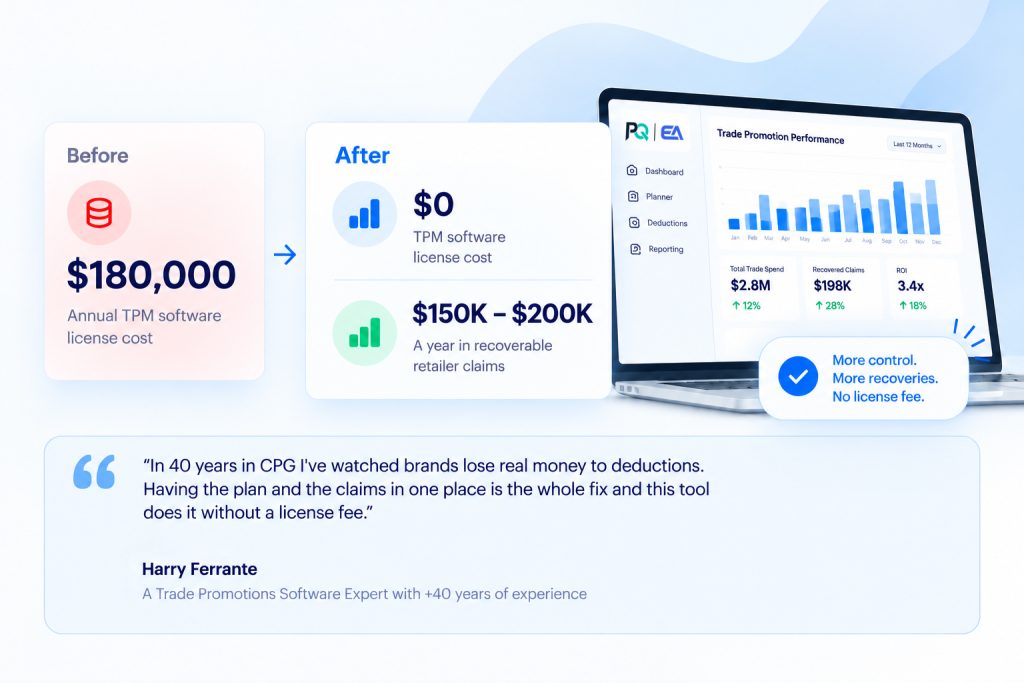
Built Around Complex Promotion Environments
Promotional structures vary by category, customer, channel, and market. The platform can be configured around the commercial and financial workflows used within your business.

Manage customer promotions, trade budgets, deductions, and performance across large product portfolios.

Coordinate promotions with demand planning, seasonal activity, customer programs, and inventory requirements.

Improve visibility across customer programs, pricing, promotional spend, deductions, and performance.

Manage promotional programs across retailers, products, categories, and sales channels.

Track trade investment and promotion results across customers, products, categories, and retail programs.
Frequently Asked Questions