 Skip to content



To understand commerce, it’s essential to know the contrast between retail and wholesale. These models connect but operate in distinct ways, affecting pricing, target markets, and business operations. Each model has its approach to products and customers. This blog explores the main differences between retail vs. wholesale, how they work, and pricing methods for both.
What is Retail?

Retail sells products to customers for personal use, usually at higher prices in smaller quantities. Examples include fashion stores, electronics shops, and e-commerce platforms like Amazon.
Retail means client interaction and handling duties such as marketing, operations, and sales. For instance, a vendor buys bamboo toothbrushes for three dollars each and delivers them for eight dollars, including expenses and making revenue.
How Does Retail Work?
- Sourcing Products: Vendors buy from producers or wholesalers.
- Inventory Management: Traders track stock levels to make sure products are in stock.
- Product Display: Stores or websites showcase products to attract customers.
- Sales Process: Retailers assist customers and process transactions.
- Customer Service: Retailers provide services like returns, exchanges, and support.
- Order Fulfillment: Retailers handle packing and shipping products to customers.
Post-Sale Support: Retailers address customer concerns after the sale.
Pros:
- Higher profits: Retailers can mark up prices for higher profits per item than wholesale.
- Customer feedback: Retailers receive customer feedback to improve products and sales strategies.
- More control: Retailers control pricing, marketing, and presentation, shaping their brand.
Cons:
- Tough competition: Smart marketing and knowing your audience helps you stand out in retail.
- Extra costs: Retailers must pay for things like rent, advertising, and wages, which add to expenses.
Shipping challenges: Customers expect fast, cheap delivery, complicated shipping, and inventory management.
What is Wholesale?
Wholesale sells products in majority to businesses at less cost, providing bulk buying and discounts. It can be difficult if you don’t like managing big orders or handling inventory. Wholesale suits those who prefer working with businesses.
For example, a wholesaler acquires 500 water bottles at five dollars each and sells them to 10 stores for fifteen dollars each, and earns a profit after costs.
How Does Wholesale Work?
- Bulk Purchasing: Wholesalers buy products in big amounts at discounted costs.
- Distribution: Wholesalers provide products to vendors or other businesses.
- Pricing: Wholesalers offer lower prices per unit, selling at a markup for profit.
- Storage and Logistics: Wholesalers manage inventory and shipping logistics.
Pros:
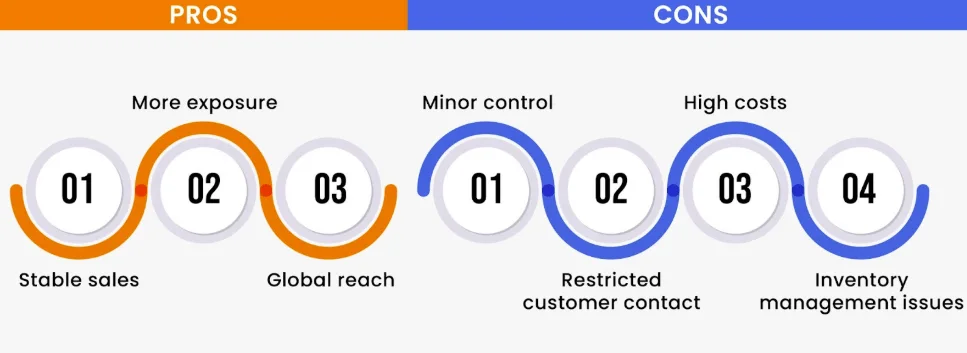
- Stable sales: Selling in bulk reduces reorders, ensuring steady income and higher order values.
- More exposure: Selling to many retailers boosts brand awareness by reaching more customers.
- Global reach: Wholesalers can expand globally easily, with bulk shipping reducing costs.
Cons:
- Minor control: Once sold to a dealer, the wholesaler loses control over pricing and marketing.
- Restricted customer contact: Wholesalers rarely engage with end clients, restricting partnership development possibilities.
- High costs: Beginning a wholesale business needs a lot of advance money to buy immense amounts of stock and rent storehouses.
- Inventory management issues: Managing large stock is challenging without proper inventory systems.
Retail vs. Wholesale: Key Differences
| Retail | Wholesale | |
| Customer Base | Consumers | Business (e.g. retailers) |
| Sales Volume | Many small transactions | Fewer large transactions |
| Pricing | Higher per unit | Lower per unit |
| Profit margins | Higher | Lower |
| Marketing focus | B2C (business to consumers) | B2B (business to business) |
| Lower costs | Purchasing from wholesalers at lower costs. | Buying in bulk means better prices. |
| Big sales | Sell to clients, which can lead to a larger volume of transactions. | Sells large quantities to business |
| Stable Income | Steady income from repeat customers and ongoing sales. | Regular orders from business provide steady revenue. |
| Direct customer contact | Build relationships and brand loyalty through customer interaction. | No customer contact |
| Control | Control over product marketing, pricing, and customer experience. | Control over pricing, sales strategy,and order volume. |
| Flexible | Ability to adjust to customer feedback and market trends. | Ability to adjust products and prices for different businesses. |
| Big Investment | High initial setup costs for stores and inventory especially in brick and mortar. | Requires significant upfront capital to purchase inventory. |
| Competition | Intense competition with other retailers and other retailers and changing consumer trends. | Highly competitive market with many wholesalers. |
| Complex logistics | Managing inventory for both online and physical stores can be complex. | Managing large orders and shipment can be challenging. |
| Inventory management | Balancing diverse inventory to meet customer demand can be challenging. | Managing large stock quantities and variety can be complex. |
| High costs | High overhead costs from running a store, paying staff and handling customer service. | Limited to wholesale pricing structure, but costs are lower. |
| Market changes | Retail sales are highly susceptible to changing consumer preferences. | Less affected by direct consumer preferences. |
Retail and Wholesale Pricing Strategies
Retail Pricing:
- Cost-Plus Pricing: Add a markup to the cost of goods sold.
- Competitive Pricing: Set prices based on competitors.
- Promotional Pricing: Use discounts or sales to attract customers.
Wholesale Pricing:
- Cost-Plus Pricing: Like retail but with bulk purchasing.
- Competitive Pricing: Fix costs to compare or defeat opponents.
Retail vs. Wholesale: Which is Right for You?
- Retail: Best if you want to interact with customers and handle fewer stocks.
- Wholesale: Best if you understand bulk buying and want to sell to businesses.
Things to Consider
If you’re considering marketing wholesale or retail, you might be able to do both. But, here are some things to consider about:
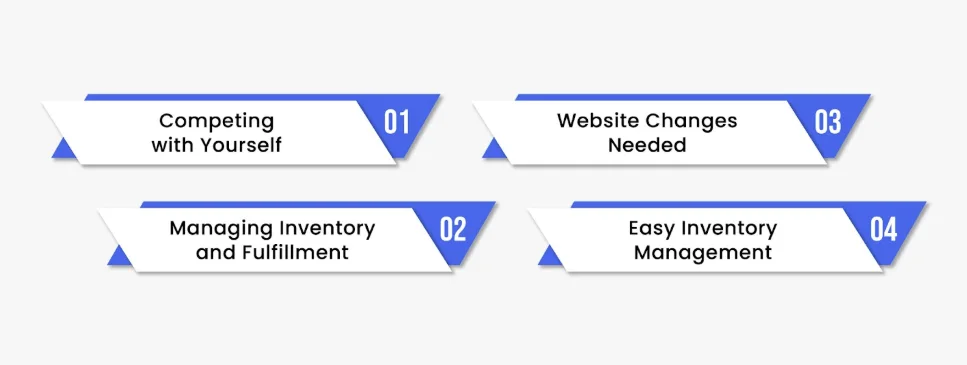
1. Competing with Yourself
Selling your products in your retail store means you’re competing with the retailers you sell to wholesale. To avoid competition, offer different products for retail and wholesale.
2.Managing Inventory and Fulfillment
Selling both wholesale and retail means managing two different businesses. You need a clear plan for inventory and fulfillment to ensure you have enough stock for both. Decide if you’ll store everything in one warehouse or use separate ones for each side of the business.
3.Website Changes Needed
You’ll need to select how to fix up your website. You can either make two distinct sites or change your existing site to manage both wholesale and retail. A separate portal for wholesale buyers or different pages for each model could work.
4.Easy Inventory Management
No matter which option you choose, inventory management software can help you:
- Track what’s selling
- Keep an eye on stock levels
- Automate reordering
- Track warehouse performance
- See upcoming sales orders
Conclusion
To succeed, you need to understand both retail and wholesale. Knowing how retail prices work and how wholesale operates helps you set the right prices. Understanding these differences helps your business compete better. Using this knowledge will keep your business strong and profitable.
