Planning & Analysis
Process Solutions


Streamline the AP cycles, organize the workflow, and develop the vendor management strategy
The accounts payable process is significant in ensuring that a company monitors its cash, maintains good relationships with vendors, and keeps financial records accurate.
The AP problems are typically caused by weak processes, rather than heavy workloads. Lack of clear accounts payable best practices in companies results in late payments, invoice duplication, and a lack of coordination between procurement and finance departments.
Several finance departments continue to operate with manual processes or fragmented systems that slow the invoice processing cycle and reduce AP productivity. These weaknesses become more difficult to control as companies grow and invoice volumes rise, particularly when reporting deadlines are tightened.
So, what practical steps can organisations take to accelerate and improve the accounts payable cycle?
Let’s find out.
Accounts payable might seem simple, yet even minor inefficiencies can quickly lead to major issues. Paper approvals, email-based invoice tracking, or ambiguous procedures may delay payments and irritate suppliers.
These issues are frequently addressed in webinars and industry podcasts organized by such organizations as Financial Executives International and the CFO Leadership Council. The message they are trying to convey is quite straightforward: best practices in accounts payable can help finance teams work more quickly, minimize errors, and maintain healthy relationships with suppliers.
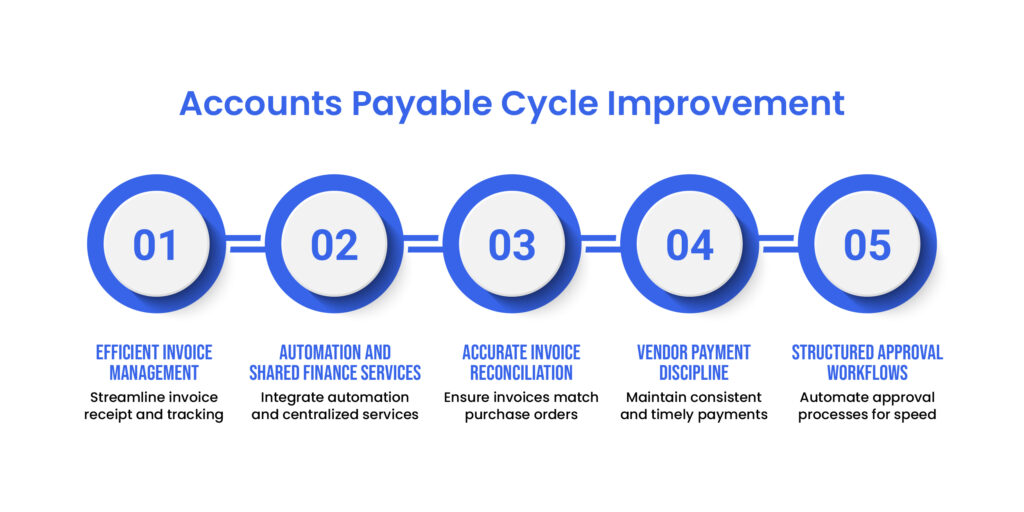
The successful AP process is built on a clear, structured method for receiving and tracking invoices. Digital invoice systems are now commonplace, with vendors submitting invoices to many companies via a portal or an email capture system. This enables the finance departments to receive, store, and pay invoices under a single platform.
For example, centralized invoice systems are common among large retailers and manufacturing companies that issue thousands of invoices each month. Using organized invoice receipt and digital monitoring, companies can now process invoices 2-3 times faster and gain better visibility into spending and cash flow.
There are invoice delays due to unclear approvals. In cases where email approvals or paper signatures from the finance teams are involved, it can take days for invoices to be noticed. The solution to this issue is a structured approval workflow that establishes definite approval paths.
For example, purchases under a set amount may not require approval from a department manager, whereas higher amounts must be reviewed by the finance department. This routing is now set up and automated by many organizations so that invoices are delivered directly to the appropriate individual, enhancing processing speed and accountability.
Regular and predictable payment schedules are useful for building good relations with suppliers. Vendors depend on timely payments to operate their businesses. Companies that make payments to vendors on fixed schedules, such as weekly or bi-weekly payment runs, minimize conflicts and enhance trust.
Timely payment to vendors is also a factor that enables companies to negotiate favorable contract terms or secure the most favorable prices in industries such as manufacturing, construction, and logistics.
Finance teams are advised to ensure the invoice matches the purchase order, contract, or delivery record before making payments. It is commonly referred to as three-way matching and is done to avoid duplicates, billing mistakes, or fraud. For example, when a supplier has invoiced 100 units, but the purchase order has accepted only 80, the system raises a red flag. Proper reconciliation ensures business security and helps maintain clean auditing records.
To address skills gaps and achieve process efficiency, most organizations are embracing shared finance service models. Under this system, processes such as accounts payable are managed by a central team serving multiple departments or locations. This assists businesses with accounts payable workflow best practices, the use of homogeneous accounts payable procedures, and improved financial control.
A shared finance service model helps accelerate processing, improve vendor relationships, and improve cost control.
Minor issues in accounts payable can lead to delayed payments, errors, and dissatisfied vendors. It is frequently discussed in webinars and industry podcasts organized by groups such as Financial Executive International and the CFO Leadership Council. They tend to emphasize that good accounts payable practices begin with well-defined workflows and responsibilities.
The four major steps in a structured payment process are receiving invoices, verifying details, approving payments, and finalizing payments. Invoices are paid more quickly, and errors are minimized when a clear owner and timeline are assigned to each step. An example is where most retail and manufacturing organizations delegate invoice checking to a purchasing group, then forward the same to finance for payment.
Payments can be carefully verified to be correct by comparing the invoices with records of the purchase and delivery. This will eliminate duplications, billing mistakes and possible disagreements. As an example, logistics and manufacturing companies tend to look at all orders, receipts and invoices and ensure that they match properly before releasing money.
An effective and systematic approval procedure would help avoid confusion and delays. The invoices are sent to the relevant manager in accordance with established regulations; hence, minor purchases are processed as quickly as possible, whereas large amounts are processed by the finance department leadership. These structured workflows are used by many companies in industries such as healthcare and technology to maintain payment tracking and accountability.
Digital invoice tracking systems enable finance departments to track the status of every invoice. Such visibility eliminates delays and enables early problem identification. There is also a high level of internal controls, such as verification checks and approval limits, which will minimize the risk of errors and facilitate audit compliance.
Numerous companies pay accounts through shared finance service centers today. In this model, a central finance administration processes invoices from multiple departments or locations.
Shared services are frequently used by large multinational corporations operating in the retail and consumer goods sectors, where workflows are standardized, and operations are more efficient.
Key Elements
Outsource A/P A/R will help transform accounts payable into a regulated, effective, and scalable financial operation.
Manual data entry, email approvals, and disconnected systems can slow accounts payable. Finance executives frequently emphasize in webinars and research reports published by firms such as Gartner and Deloitte that modern AP best practices are highly automated and centralized in their management.
The accounts payable system tracks invoice details, forwards invoices to the relevant department, and manually monitors payment status. This is something the AP team should pay special attention to when ensuring invoices are processed properly and in a timely manner. Several technology and e-commerce firms use well-structured manual processes to handle high volumes of supplier invoices as effectively as possible.
The invoices are channeled by a well-structured approval process; therefore, they are passed through a series of approvers. Follow-ups and clear responsibilities also ensure that delays are avoided as payment cycles would be provided on time and processing would be efficient.
The automation platforms offer real-time dashboards that display the spending trends and invoice status. They also develop digital audit trails, which help prevent fraud and support compliance. Financial departments in industries such as healthcare and finance usually use the tools to ensure closer supervision.
Electronic payment systems minimize manual and paperwork. Most organizations nowadays make payments to their vendors via digital transfers rather than checks, which enhances accuracy and reduces administrative overhead.
Automation and shared finance models are combined by many companies. A centralized finance department handles automated AP outsourcing operations to various departments or locations, which aid in streamlining work and increasing operations more effectively.
Key Benefits
This strategy is useful in streamlining accounts payable and making it more scalable and strategic.
Best practices in accounts payable include managing vendor relationships effectively. In webinars and podcasts, finance professionals affiliated with organizations such as Financial Executives International and the CFO Leadership Council frequently state that identifying payment strategies could help companies manage their finances and gain the trust of their suppliers.
Unambiguous terms of vendor payment assist businesses in cash flow management and cost scheduling. For example, many retail and manufacturing firms will settle on 30- or 60-day payment terms with suppliers to ensure both parties are aware of the payment due dates.
Consistent payment schedules will build strong relationships with suppliers and minimize payment disputes. Firms in other sectors, such as logistics and construction, usually have weekly or biweekly payrolls to ensure suppliers are paid on time.
Effective communication with the vendors will resolve the invoice problems in a short period. Periodic reconciliation of AP is performed to ensure that invoices and payments are correct. Shared vendor portals are common among many technology and service companies and enable them to monitor invoices and settle disputes more quickly.
Quick Checklist
Accounts payable is no longer a back-office activity. It has become significant in business and financial performance. Companies can transform AP into a dependable and effective financial operation by adopting accounts payable best practices that ensure AP is not a slow, reactive process.
Companies that enhance their AP processes tend to have shorter invoice processing times, fewer mistakes, and lower operating costs. Processes and automation minimize human effort while maintaining approvals, reconciliation, and compliance. Organizations such as Gartner and Deloitte, in their financial research and discussions, note that an efficient AP system can enhance visibility into cash flow and financial planning.
Established invoicing procedures, consistent payment rates, and payment terms contribute to vendors’ confidence. By maintaining good relationships with suppliers, businesses can get better prices, flexible payment terms, or discounts.
Automation tools enable faster approvals, monitor spending, and provide electronic payments. They also generate audit trails that support compliance and mitigate the risk of fraud. For companies integrating automation with shared finance service models, this enables the centralization of AP operations and the achievement of consistent financial control across departments.
The benefits of strong AP practices and shared finance strategies in organizations tend to enhance greater financial control, enhanced supplier relationships, and more effective operations. Properly organized AP operations support business development by transforming routine payment processes into a reliable financial foundation.