Planning & Analysis
Process Solutions


What happens when accounting problems disrupt your supply chain?
We can order products worldwide with a few clicks, but how does it happen?
For businesses, the answer is the global supply chain. It links materials, factories, and shipping to deliver products.
But what happens if things go wrong like accounting challenges in the supply chain?
Supply chain problems happen when goods are late. A hurricane postponed a ship from India to the U.S., resulting in casualties. In 2025, inflation, high interest rates, and supply chain problems and climate change harmed businesses. An APQC survey shows 84% of firms changed their supply chain strategies. Changing demands and globalization make supply chains difficult.
Key Takeaways
Things to Consider
Note
Supply chain challenges are not always avoidable, but planning reduces the impact.
Bonus Point
Companies that invest in AI forecasting and digital tools bounce back faster during disruptions.
Disclaimer
This blog provides general insights into supply chain and accounting challenges. It is not financial or legal advice. Businesses should consult qualified experts for specific guidance.
Chart
| Challenge | Example | Impact | Solution |
| Material shortages | Chip shortage in cars | Delays, high costs | Use more suppliers |
| Fuel costs | Shipping price hikes | Costly transport | Optimize routes, track. |
| Forecasting demand | Heat waves→cold drinks | Stockouts, overstock | Use data and AI |
| Labor shortages | UK driver gaps | Delivery delays | Hire local, automate |
| Tariffs and rules | Brexit checks | Border delays, cost | Train staff, go digital. |
A supply chain moves a product from raw materials to the customer. Each step depends on the next, so problems raise costs. A strong supply chain lowers costs; a weak one raises them.
Demand Forecasting Firms need to predict how much of a product customers will want. If they underestimate demand, items sell out too fast, leading to lost sales. If they overestimate, products pile up in warehouses. For example, Supermarkets use past sales and weather to plan. In heatwaves, they stock more drinks and ice cream.
Sourcing Materials: Reliable suppliers are vital. Apple uses many suppliers for iPhone parts to prevent disruptions. Ford and GM had to stop production in 2021 due to microchip shortages.
Logistics and Transport Moving materials to factories and products to customers is key. High fuel costs and customs checks can delay deliveries, like Marks & Spencer after Brexit.
Today’s supply chains face shortages, high fuel costs, and changing demand. Companies must focus on real sustainability, not “greenwashing.” Labor shortages since the pandemic make hiring and keeping staff harder.
Several factors are reshaping supply chains. Technology like AI, automation, and blockchain speeds up business and online demand. Stricter rules, transport limits, COVID-19, Panama Canal, and climate events like floods and storms make supply chains harder to manage.
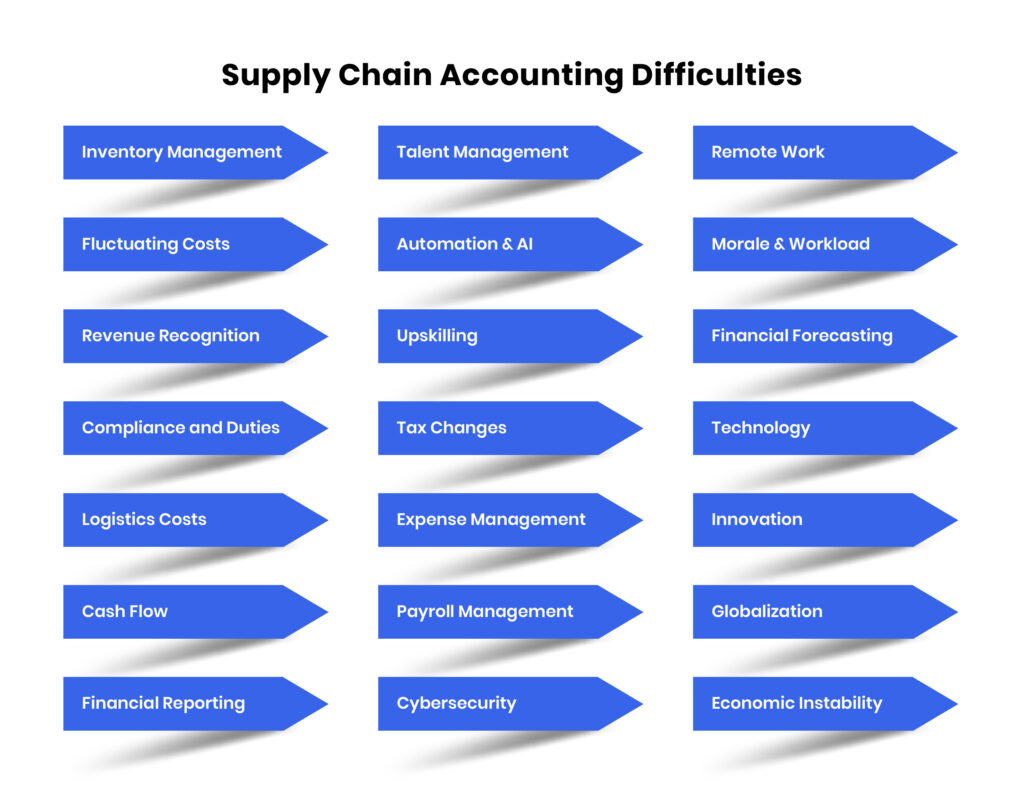
There are a list of modern day accounting challenges that supply chain face, but there are some of the common accounting challenges in supply chains:
Brexit caused a shortage of 100,000 truck drivers in the UK, making McDonald’s run out of milkshakes in 2021. COVID-19 and transport issues delayed goods. Like Samsung and Apple, delayed launches and supermarkets limit essentials. While the Ukraine war raised costs, caused Volkswagen to face shortages, and increased food prices.
Supply chains are the backbone of every business, and accounting challenges in supply chains make them tougher. One part failing slows everything, raising costs and upsetting customers. Toyota, Amazon, and Tesco show that many suppliers, safety stock, and digital tools ensure resilience. Flexibility costs more initially but prevents costly disruptions later. Businesses can’t control the economy but can manage finances.
Expertise Accelerated CPAs help businesses control costs, stay compliant, and keep finances accurate. We work with clients across industries to make supply chain accounting easier and more efficient. EA organizes data, automates tasks, and saves time to cut costs and stay compliant. Contact us today to book a call.
Slowdowns happen because of bad weather, disasters, politics, pandemics, or wars. For example, hurricanes can restrict shipments, Brexit slowed customs, and COVID-19 paused factories. High fuel costs, fewer workers, and transport limits also cause delays. Firms use thorough planning and technology to check shipments and prevent issues.
Interruptions increase expenses, cause lost sales, and upset clients. Production and stock can be interrupted, and growing energy or material costs lower profits. Unexpected demand makes planning harder, and firms may struggle to follow regulations and ethical norms. Flexible plans, security stock, and digital tools permit lessening the effect.
Businesses expand vendors, keep excess stock, and use digital tools to check and expect demand. Automation, AI, and analytics aid in controlling delays. For instance, Amazon raised its storehouses during COVID-19 to cater to increased demand. Firms also review supply chains to rectify vulnerable areas and prepare for disturbances.
Technology makes supply chains faster, accurate, and easier to manage. AI, automation, and blockchain track shipments, handle inventory, and forecast demand. Tools cut mistakes and save time. Cloud systems allow teams to work together globally. Using technology well enables firms to reduce expenses, deliver quickly, and address disturbances.
Global events can raise costs and cause shortages. The Ukraine war increased energy and transport costs and caused wiring shortages for cars. It has even increased global food prices since Ukraine ships much of the world’s grain. Firms must search for alternative suppliers and adapt quickly. Flexible and strong supply chains enable handling these shocks.