Skip to content
Accounting
Audit
Planning & Analysis
Process Solutions
Operations


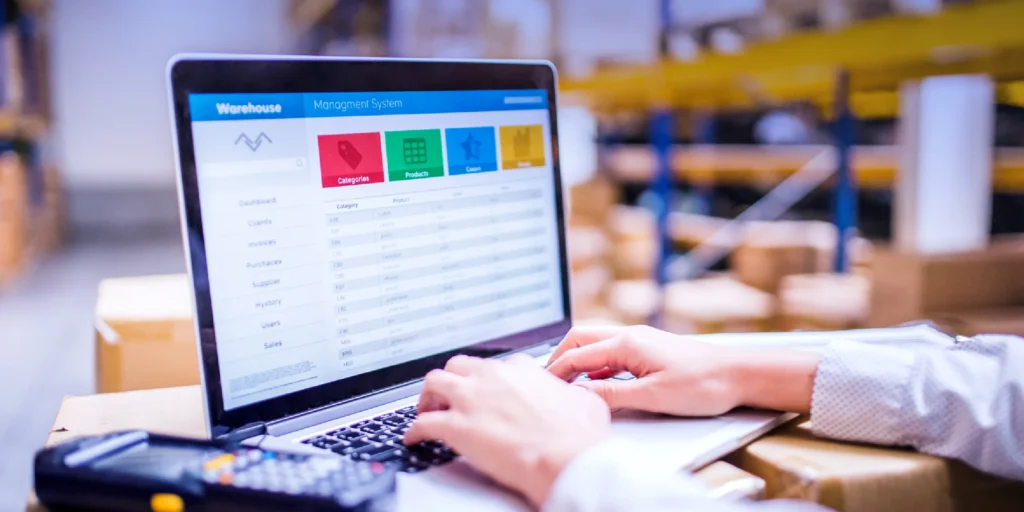
Have you ever wondered how much of the revenue you are losing in an e-commerce business is because you do not know what is in stock?
The average number of products that online retailers were out of stock had hovered at 8%, and at any given time, it was estimated that one out of every 12 products could be sold, which amounts to up to 8% of their total yearly earnings.
Poor inventory control is a huge financial drag across the retail scene worldwide. Recent statistics indicate that inventory distortion, the aggregate cost of stockouts and overstock, is a loss of more than 1.7 trillion dollars every year.
Furthermore, two out of five brands stock out at least once a week on the Internet, highlighting the prevalence of the issue among e-commerce companies of all sizes.
It is not merely a case of reducing stockouts and eliminating oversupply, but rather an endeavor to create operational resilience, customer retention, and profitability in a more competitive, digital market.
Modern systems have to handle sourcing and storage, demand forecasting, warehousing coordination, and quality control.
In the absence of live inventory tracking, companies lose the ability to attract customers to their rivals at crucial points of purchase; 69% of online consumers will leave a purchase and switch to a different brand when the product they desire is out of stock.
The correct inventory management system brings the back end of your supply chain together. It ensures that all orders reflect correct stock levels across all channels, that supply and unpredictable demand match, and that customers’ expectations of quick and dependable delivery are met. You can have your own warehouses, work with 3PL providers, or simply drop-ship goods, but a powerful system will turn inventory into a competitive edge.
In this article, we are going to unravel what the contemporary e-commerce inventory management actually involves – and why the adoption of more intelligent processes becomes not only valuable, but also a necessary ingredient to the sustainable growth in 2025 and beyond.
The retail sector is cutthroat, and e-commerce competition is unfathomable. No matter what product you sell, someone will try to sell it cheaper or some variation. In this oversaturated online marketplace, nobody is unique.
The only real way to compete is by standing out from the crowd. There are many ways to achieve this, but the most effective way is to improve the customer experience.
This is where inventory management becomes crucial. The customer experience hinges directly on your e-commerce supply chain’s performance. If a customer orders a product, it must reach them quickly, in perfect condition, and at a good price. To meet these demands, e-commerce inventory management must be optimized.
Quick delivery is only possible if the product is available. Your e-commerce inventory management must have proper demand and supply planning strategies. Otherwise, you may end up with a stockout and many customers. According to Harvard Business Review, it’s not a good look, considering 31% of customers would rather go to a competitor than wait for restocking.
Similarly, customers expect products to be delivered in pristine condition. They have paid for quality and are entitled to it. With proper e-commerce inventory management systems, we can make these demands a reality.
One of the biggest reasons products are damaged or spoiled is inappropriate storage or mishandling. Both of these are the responsibility of the inventory management function. An appropriate amount of storage must be allocated for the inventory, along with suitable conditions.
On top of this, logistics and shipping partners need to be properly trained in handling products. This is one of the big complaints currently being leveled at Amazon, as more people are receiving wrong or damaged goods.
When it comes to pricing, inventory management is again a key factor. Optimized e-commerce inventory management can save a business over 10% in cost! These savings are largely due to better supplier relations and inventory management.
Think of it like this. Your business leverages inventory demand and supply forecasting. This means you have a good idea of how much space you will need. This allows you to spend as much as is necessary on warehousing.
The money from there improves your cash flow. At the same time, your supplier is providing you with products at a better price. This means you have more leeway to price your products competitively for consumers without affecting your cash flow.
It’s all one big domino effect. When your e-commerce inventory management is optimized, all other business functions benefit.
Your marketing team can promote your business as a customer favorite for quick deliveries. Your sales department can sell without worrying about stockouts or overstocking. Better cash flow means the company has greater flexibility in decision-making.
Alas, even with all this seemingly common information, 43% of small businesses do not even deign to track their inventory. This is a major misstep, and while these businesses may be functioning as usual, they are missing out on many growth opportunities.
This is the time to ask yourself: Do I want to miss the opportunity to increase sales by reducing stockouts? Do I want always to have the right products available to meet consumer demands?
E-commerce inventory management matters. Do not sleep on this untapped growth potential. Instead, learn with EA how to integrate a proper inventory management system into your E-commerce business. Let’s start on your journey to success!
Leverage Outsourced Inventory Management E-Commerce Solutions
Outsourced inventory management e-commerce solutions are the safest and best investment when getting started. However, inventory management is complex and can take time for entrepreneurs who already have so much on their plates.
Outsourced inventory management and e-commerce solutions are the perfect choice for most small businesses, rather than overloading with work. As we have demonstrated, these inventory management services are affordable and can greatly boost business value. Outsourcing firms already have contacts and infrastructure, which you can access when enlisting their help.
There are hundreds of options for the best inventory management software on the market, each providing specific features. Some are even tuned to work within certain industries, such as the medical or CPG sectors.
These software solutions are nothing short of miraculous. They can seamlessly track inventory from procurement to sale. Imagine someone placing an order on your website. The order will be recorded, an invoice will be automatically generated, and your inventory management software will update the records to reflect the sale. The software will also track every distinct order and its progress.
By using RFID and barcode technology, every product unit is individually trackable. This allows you to monitor shipping and be transparent with customers. Have you ever bought a product online and received a product journey notification? It’s all done with inventory management software. With these metrics, you can also better plan delivery routes, saving on valuable fuel and labor costs.
As mentioned earlier, one of the biggest challenges e-commerce businesses face is demand and supply planning. Being able to reasonably predict how much a product will sell is key to optimizing your inventory. You do not want to be the one with too much or too little stock. Too much, and you end up selling at cost or worse. Too little, and you leave customers disappointed and heading to competitors.
Demand and supply planning curbs all that. It is a complex process that helps businesses determine future demand for a product. Then, based on this demand forecast, they can prepare a supply plan that specifies how much they need to have ready for shipping. It also helps warehouses prepare appropriately for storage.
AI tools are all the rage right now. E-commerce inventory management is no different, with myriad AI tools. These tools can generate detailed forecasts and projections of demand and supply.
Feed them the relevant historical and market data, and they can make a reasonably accurate prediction. Of course, this prediction is useless if you do not know how to translate it into a business strategy. This is why we highly recommend finding a professional for the job.
These days, e-commerce sellers should have multiple online storefronts available. The best thing is, of course, having your own website. But even beyond that, having a profile and store on Amazon and other platforms is integral. This is what we call multi-channel e-commerce. Multiple stores are set up across platforms like Instagram, Facebook, YouTube, TikTok, and other social media.
With all these channels, you must also have a centralized inventory management system to keep everything organized. Maybe most of your orders come from Amazon and Instagram, and some come from Facebook and your website.
All of these need to be tracked and fulfilled with the same level of care. Inventory management software can help integrate your inventory management with your sales channel. What is most important is not to forget that you are not just managing one storefront.
The data from your sales channels must also be factored into demand planning. You will also likely deal with various platform fees and fulfillment arrangements, which must be tackled and planned individually.
The world is currently honed in on the ethics of consumption. Climate change and other environmental concerns are at the forefront of international business discourse, and governments are pushing for decarbonization.
This is an often-forgotten but relevant part of e-commerce inventory management. You do not just want your inventory management optimized; you want it to be sustainable. Using eco-friendly packaging, leveraging drone- and electric-driven logistics, and phasing out plastic bags are just some of the initiatives consumers expect today.
As an inventory manager, you must determine how to meet these expectations. This means searching and collaborating with decarbonized logistics providers, pushing manufacturers to use minimal packaging, and finding alternative storage methods that involve recyclable and biodegradable materials. All of these concerns, and more, need to be addressed and accounted for in your inventory management strategy.
Read here to learn more about the impact of sustainability on sales in the CPG industry.
Inventory management is one area that has not been well developed, despite its significance. Many small and mid-range e-commerce businesses continue to use spreadsheets, manual tracking, or disjointed systems. Such businesses might seem to be functioning well, but they are gradually losing revenue due to lost sales, unsold inventory, and ineffective fulfillment.
Whether inventory management is important is no longer a question, but how many days do you have to operate without having learnt how to manage it?
In their case, outsourcing inventory management is the shortest route to operational maturity for early-stage and growing businesses. Outsourcing partners are time-saving, error-reducing, and scalability-accelerating, with established systems, skilled professionals, and existing logistics relationships.
Recent inventory software automates order management, inventory management, invoicing, and fulfillment. The integration of barcode and RFID makes all units traceable, enhancing transparency for businesses and customers and reducing labor and fuel consumption.
The success of inventories relies on the precision of the forecasting. Planning effective demand is a balance among past data, seasonality, promotions, and market trends to avoid shortages and excess stock. AI-powered forecasting technologies improve forecasts, yet professional interpretation is required to translate knowledge into action.
Aggregation of websites, marketplaces, and social platforms needs a single inventory system to be sold. Centralization will eliminate overselling, enable real-time stock level synchronization, and ensure uniform order fulfillment regardless of origin.
Sustainability has become a business demand. Inventory choices impact on packaging waste, energy consumption in storage, and transportation emissions. Cooperation with environmentally friendly suppliers, packaging optimization, and the selection of less environmentally harmful logistics partners not only mitigates environmental impact but also enhances brand image.
E-commerce inventory management ceases to be a support service- it is a growth lever. Companies that treat inventory as a dynamic system rather than a fixed number achieve faster fulfillment, stronger customer loyalty, better cash flow, and a competitive advantage in the long term.
The margin of operation error narrows as the competition increases. Investing in inventory management is no longer an option; it has become a necessity, whether through outsourcing, sophisticated software, or professional planning.
The current optimizers at the same place are in a good position to grow tomorrow without hesitation.
In short, e-commerce inventory management is a critical junction in e-commerce operations that deserves attention. Investing in hiring a professional to manage inventory or buying software that helps via automation are the bare minimum requirements. Competition is only getting fiercer, and optimizing inventory management is an avenue to leverage to stay in the race.